As I often do in the waning moments of the school year, I’ve been mulling over everything that has happened since September. The more I think about this year, the more I am filled with pride. We really did have an excellent year of art making and creative thinking. Throughout the course of this year, we successfully exhibited work in a prominent downtown gallery, earned more awards at scholastics than ever before, created a fundraiser "pup" for the Fetch-a-Cure foundation, successfully collaborated (almost daily) with Shawn Gross, and were visited by several prominent artists from Richmond.
Not only did we succeed in creating thoughtful artwork, but we also grew closer as a family. One of the things that I love most about teaching art is the atmosphere that it can provide for learning. Let’s face it, what we do in the art room doesn’t necessarily “look like” learning in the traditional sense of the word. We listen to and learn about great music, spontaneously break into improvisational dance, learn from experimentation with a variety of media, and support one another with constructive and thoughtful feedback. Though it happens from time to time in “core” classrooms, it is not the norm. Somehow, we all manage to stay incredibly challenged without sacrificing any fun at all.
As I begin my plans for next year, I find myself almost giddy with its anticipation. Don’t get me wrong, I’m looking forward to relaxing and making some artwork this summer, but I will also be working hard on making sure we have some new creative challenges for the upcoming year. Next year really does have the potential to become the best year of my career in teaching. We have so many talented students in all of our levels, and I cannot wait to witness how each of you rise to the challenges that I set forth. I have a good feeling that many more awards will be earned by the DRHSART program over the next year.
As you prepare to leave for the summer, please do not forget that you are an artist. Live as an artist daily. Whether you make art everyday or not, each day should be approached with the eyes and ears of an artist. Practice keeping in touch with your creativity by maintaining a small visual journal. Don’t wait until the last two weeks of summer to begin your summer work. Try to remember that the summer work is essential to the overall quality of your portfolio. Spending time on the summer artwork will only make the college application process easier.
I also want to mention that students who do not plan on going to art school will also greatly benefit from completing a quality portfolio. I’ve had a lot of students include a supplemental portfolio when applying to college, and most of those students swear that the portfolio was instrumental in being accepted to the schools that they sought. The time you put into your summer work will certainly pay off in the long run.
I wish you all al safe and relaxing summer break. Please enjoy everyday that you have, and never let yourself become bored. If you get bored, you are the only one to blame. There is always art to be made, or something new to learn.
Friday, May 29, 2009

Wednesday, December 10, 2008
Red Door Gallery Show 2008
 Now that the storm has calmed, I wanted to take a minute to reflect on the show that we just had at the Red Door Gallery. I should start with a word of gratitude to Jerry Shapiro for offering to host the show for you all. The show proved to be the biggest motivator of student art I've seen in my career as an art educator. Additionally, I really want to thank Meredith for her tireless efforts to get our work on the walls. She is a true master of her craft, and was sincerely generous with her time, as she spent nearly 12 hours with us on Saturday after having worked 15 hours the day prior.
What excites me most about this show, more than the positive press received, is the increased work ethic and interest in the work demonstrated by each of you. Our critiques were incredibly meaningful and increasingly thought provoking as the date of the show grew nearer. I am hoping that the same type of thought and energy will continue. Overall, I'm very proud of the work that we are doing here, and I'd like to think each of you are equally proud of our efforts. There have been incredible improvements in each of your works, and I look forward to seeing that improvement continue as we move forward.
Wednesday, December 5, 2007
Documenting Your Own Work :: A Short Lesson On Taking Slides

I wish someone taught me how to professionally document my work while I was in high school, as it would have saved me a lot of money. The purpose behind this blog entry is to provide each of you with a basic knowledge of how to photograph your own work. Let’s begin with the materials that will be necessary
Materials:
35mm SLR Camera
18% Grey Card
2 Photo Flood light bulbs (250 watt)
T64 slide film (Fujichrome is recommended, and is available at Richmond Camera)
2 Clamp lights or Stand lights
Backdrop (solid dark color that is free of wrinkles)
Tripod
Procedure:
Step One: Preparing the Area
Since you will be using Tungsten slide film, it is necessary to photograph the work indoors, in a location that is free of sunlight. Tungsten film will react with sunlight, resulting in slides that have a bluish tint. If you are shooting your slides during the day, it is necessary to completely cover any windows to protect your film from sunlight.
After finding your location, you will need to hang your backdrop. Remember, this backdrop can be any number of dark, solid colored materials. I often use an oversized black sheet that has been pressed, as to eliminate background detail that could compete with the artwork. After hanging the backdrop, you will need to set up your lighting. It’s best to angle your lights at 45 degree angles to the artwork, as it usually reduces glare. Try to position your lights and your camera about six feet from your subject (sometimes larger work will require you to move further from the subject).
Step Two: Getting the Correct Exposure
After you have loaded your slide film into your camera, you will need to take a light reading for your shots. This will only have to be done once, but be sure to take the time to get an accurate reading before you begin shooting. To do this you will need to use your grey card. A grey card is the exact tone that your light meter seeks for a balance of value in any given scene. Sometimes, a scene will have exceptionally high contrast, and will make the camera think that the overall value of the scene is too light or too dark.
Since you will be using a very dark backdrop for your slides, the light meter will give you an over-exposed reading, in an effort to make 18% grey out of the given scene. To trick the light meter, you will need to hold your grey card directly in front of your artwork, fill the frame with grey, and take your light reading from the card rather than from the actual scene that you will be shooting. I recommend that you use an aperture setting of f 8.
Based on past experience, I have noticed that I my light meter often gives me a shutter combination of 1/15sec when using an aperture of f 8. Even though I’ve noticed this trend, I always use my grey card to get an accurate light reading. In addition to using the grey card, you will need to “bracket” your shot in order to guarantee a successful image. This is slightly more expensive, but it will give you the highest quality slide possible. Bracketing refers to shooting three slides of your given scene; one at the exposure provided by your light meter, a shot one stop down, and a shot that is opened up one stop.
Ex) Using my grey card, with the aperture setting of f8, my light meter might indicate that the scene will need a shutter speed of 1/15 sec. I would then shoot one slide at 1/15, one at 1/10, and a third at 1/30. This will give me three slightly different slides. Ideally, the original image that was shot at 1/15 will be the most accurate, but sometimes your meter is not accurate and one of the other two slides will contain the exact exposure.
Step Three: Getting Your Slides Developed
Once you have shot all of your work, you will need to take your film to Richmond Camera to get it exposed. Realize that it will take about a week and a half to get your slides back. Once you have picked up your slides, you will need to look at them using a magnifier and light table.
Separate out all of the slides that are the proper exposure and place them into an archival slide sheet. This sheet of perfectly exposed slides will be the originals from which you will make duplicates. Duplicates can be made at Richmond Camera, and should take approximately one week to be returned. Make as many duplicates of your work as you will need for art school, and NEVER send away your originals, as you do not want to have to shoot the same images again later.
Step Four: Organizing and Labeling Your Slides
Now that you have all of your slides, you will need to organize them, being sure to put your strongest work first. Those who will be reviewing your portfolio are likely to judge your ability based on the first few images that they see. Impress them right away, and you will have their attention throughout the remainder of your portfolio review. It may also be a good idea to save one of your stronger pieces for last, as the review panel has a tendency to remember the first and last pieces that they saw.
It’s important to fill the empty slots of your slide sheet with black squares of paper. This will block out unwanted light, and will allow those who are reviewing your work to see your slides more clearly. In addition to all of these things, you will need to properly label you slides. Always check to see if the art school has specific guidelines for labeling the work. If specific directions are given (VCU for example), you should be sure to adhere to them.
Given the competitive nature of the marketplace for artists and artist/educators, it helps to have professional looking labels. These can be created on labeling machines and word processors. If handwritten labels are a necessity, print clearly. The care used in labeling slides is a statement about your professionalism. If the slide is poorly labeled, cracked, scratched, etc., it may lead the viewer to believe that you do not care . . . so why should they?
Check your slides periodically to be sure the slide labels and signal dots are sticking to the slide. It is highly frustrating for the person operating the projector to have slides stick due to labels that fall off into the projector or slide tray.
Each slide should have labels that provide the following information:
1. Your name.
2. Title of your work. All titles should be italicized or underlined. If your labels are handwritten simply underline the title.
3. The medium. Be reasonable in your choice of terms. Slide label space may affect your word choice, so select your terms well.
4. Date of completion.
5. Dimensions. Whenever you provide dimensions for a work of art, you must use the following conventions:
Three-dimensional works: Height x Width x Depth (always in that order)
Two-dimensional works: Height x Width (always in that order)
Monday, November 12, 2007
Writing an Artist's Statement
I have given you all a guide to help you shape your artist's statement, and I'm currently in the process of providing feedback to each of the statements that were turned in. As I've been reading the statements, I've noticed a few things that I want to address with all of you at one time (it takes to long to write the same thing over and over again on each document).
When writing about your work, think in terms of "all of your work" not individual works of art. An artist's statement is an intellectual summary of your process and artistic aim as a whole. Try to write a statement that gives the viewer insight into why you make what you make, but don't allude to the fact that your work was a part of an assignment. The goal here is that these statements sound professional and succinct. Your statement should be grammatically exact, and you should always check with a good writer if you are unsure about the grammar of your statement. Also, try to not be excessively wordy with your writing, aim for informative brevity.
Your artist's statement is an extension of your work, and it is absolutely essential that you put as much effort into it as you do your artwork. You should seek to craft a document that speaks clearly to your artistic intentions, doing so in a way that showcases your intellect, creativity, and conceptual ability. As your statements are returned, please put proper time an energy into re-writing them with all of this in mind.
When writing about your work, think in terms of "all of your work" not individual works of art. An artist's statement is an intellectual summary of your process and artistic aim as a whole. Try to write a statement that gives the viewer insight into why you make what you make, but don't allude to the fact that your work was a part of an assignment. The goal here is that these statements sound professional and succinct. Your statement should be grammatically exact, and you should always check with a good writer if you are unsure about the grammar of your statement. Also, try to not be excessively wordy with your writing, aim for informative brevity.
Your artist's statement is an extension of your work, and it is absolutely essential that you put as much effort into it as you do your artwork. You should seek to craft a document that speaks clearly to your artistic intentions, doing so in a way that showcases your intellect, creativity, and conceptual ability. As your statements are returned, please put proper time an energy into re-writing them with all of this in mind.
Wednesday, November 7, 2007
2nd Nine-Weeks :: “Identity”
Identity can mean many things, but the important question for you to ask yourself is “What does it mean to me”. The term “identity” can be used to define the content of numerous artworks throughout history. I’ve given a very open ended term for your definition in order to offer as much freedom for expression as possible. This term will need to be brainstormed, and each of you will have to conjure a minimum of four artworks that represent this artistic theme.
In order to offer even more freedom for exploration, I will not hold you to actually fabricating the work that you have conceptually developed in your sketchbook. Students who found inspiration in the original four works of art from this year are more than welcome to continue down that artistic path, but will still be required to conceptually develop the four works that embody the term “identity”. Some students have new ideas about the type of work they want to make in the second nine-week period. Those students should speak with me about refining the new exploration, and will be required to fully brainstorm the term identity as well.
Students who choose not to fabricate the concepts surrounding the theme are encouraged to think well beyond the limitations of our classroom and the supplies currently available. Be bold in your brainstorming, thinking in terms of unlimited exhibition space, unlimited resources for materials, and an audience similar to that which flocks to Venice every two years for the Biennale. How would your statement of “identity” grab the viewer in the clutches of its content? What would critics write about your work when they see it next to the work of artists such as Sigmar Polke, Emily Prince, El Anatsui, Jenny Holzer, and Yang Zhenzong?
As you begin to brainstorm, please revisit my blog entries from September that outline the artistic themes for the first nine-weeks of school. Look at the questions that I wrote, and plug the word “identity” in where it makes sense. Use those questions to kick start your brainstorming and see where it takes you. The ultimate goal in the second nine-weeks is technical and conceptual growth in each student’s work. I look forward to seeing the results of the second leg of our artistic journey this year.
In order to offer even more freedom for exploration, I will not hold you to actually fabricating the work that you have conceptually developed in your sketchbook. Students who found inspiration in the original four works of art from this year are more than welcome to continue down that artistic path, but will still be required to conceptually develop the four works that embody the term “identity”. Some students have new ideas about the type of work they want to make in the second nine-week period. Those students should speak with me about refining the new exploration, and will be required to fully brainstorm the term identity as well.
Students who choose not to fabricate the concepts surrounding the theme are encouraged to think well beyond the limitations of our classroom and the supplies currently available. Be bold in your brainstorming, thinking in terms of unlimited exhibition space, unlimited resources for materials, and an audience similar to that which flocks to Venice every two years for the Biennale. How would your statement of “identity” grab the viewer in the clutches of its content? What would critics write about your work when they see it next to the work of artists such as Sigmar Polke, Emily Prince, El Anatsui, Jenny Holzer, and Yang Zhenzong?
As you begin to brainstorm, please revisit my blog entries from September that outline the artistic themes for the first nine-weeks of school. Look at the questions that I wrote, and plug the word “identity” in where it makes sense. Use those questions to kick start your brainstorming and see where it takes you. The ultimate goal in the second nine-weeks is technical and conceptual growth in each student’s work. I look forward to seeing the results of the second leg of our artistic journey this year.
Sunday, November 4, 2007
First Fridays :: November

I went out around town on Friday night, checking out the latest works of both local and international artists. I started my night at a new gallery on Main Street (the name escapes me), where I saw a lot of paintings in a great space. The majority of the paintings were interesting, but there was one painting in particular by and artist named Chris Metze. His work had a very well painted surface, and his marks reminded me a little bit of Cy Twombly and Cindy Neuschwander. The color was very quiet with a calming essence about it. What I liked most about the work was the subtle drawing that seemed to occur both under and on top of the painted color fields. Take a look at his website to get an idea of his work, but do so realizing that the digital image only tells a portion of the story.
 Next, I went to the Page Bond Gallery, where I was able to see Stephen Clark's newest paintings. I've been following Clark's work for close to ten years, having been originally inspired by his mark making and his use of space that resembled those noticed in Chris Metze's work this weekend. I was also drawn to the exceptionally reduced palette used in his work. It was nice to see the new images that he is creating, but I still have a stronger connection to the simplicity of his work from around '00 - '03. Having looked through his resume, I've noticed that the work on display right now at Page Bond will travel to the OKHarris Gallery in the SoHo district of New York City. I highly recommend taking a look at some NYC quality art in Richmond VA.
 While at the Page Bond Gallery, I also noticed some work by another well known painter named Peri Scwartz. Her work was simply painted well. I stood in front of her painting with a couple of other gallery goers and talked about why it was such a good painting. We discussed the derivation of Richard Diebenkorn's geometry, and the elongated, linear structure of Alberto Giacometti's work. I checked the price list, because I was curious what it would take to own a painting of hers, and I was disappointed to see a price tag of $18,000! I love art, but I just can't afford artwork with that heavy price tag. I'll have to just look at her work online for now. After looking at her body of work online, I found myself wishing that her subject matter varied a bit more. Each of her paintings is well constructed, with interesting surfaces, but seeing the same subject in each of her paintings was not as exciting as seeing one of her pieces on its own in a gallery.
After Page Bond, I darted across the street to the Reynolds Gallery, where my current VCU Graduate School painting professor, Sally Bowring, had her work on display among some of the most celebrated local and national artists. Her work was impressive in its scale, and intensely complicated in its surface. I spoke inquisitively with her about her work, asking questions that she often answered with questions of her own. When I asked her why she paints what she paints, her response was simply "Why do you breathe". Her answer was honest, quick witted, and exceptionally descriptive for its brevity; a concise answer from an artist whose life has been defined by creation. It was so typically "Sally", and made me realize why I enjoy learning from her.

After the entertainment at the Reynolds gallery, I moved downtown to Broad St. to view the work at the 1708 Gallery, where we viewed, in my opinion, the most interesting work of the night. Young Kim's show titled "Salt and Earth" was incredibly conceptual, and made from surprising media. The work was more of an installation than it was anything, as the show's focal point was a narrow grid of photo-emulsion screen printed portraits of people whose expressions projected the essence of meditation. The images were screen printed with red clay dust, and were created on meticulously formed, raised rectangular stacks of salt with beveled edges and rounded corners. Each of these meticulous screen printed salt stacks was accompanied by a small bowl of liquid placed just in front of the image. The entire collection of stacks were individually lit by the track lights, and the overall ambient light in the gallery dimmed exactly 365 times each day. Each of the elements within the exhibit was biblically relative.
I spoke with the artist for a long time, trying to get to the root of these interesting images. They seemed very process oriented, and I was curious if he felt that the process was more important than the permanent image. He didn't really seem to find any one aspect of his work more important than any other, claiming that each was an essential element to the work, therefore lacking any hierarchy of importance to him. The work's impermanence was no less a part of the work than the imagery that he has chosen to depict. I found him to be incredibly conceptual, and very concerned with the crafting of his images.
After an viewing the art at 1708, we crossed Broad Street and entered Lift Coffee Shop, where Alex Bailey's work was on display. His new work is very different than the work that he was creating in his senior year at DRHS. The new images still retain the influence of Arshile Gorky, but the use of typography and handwriting give his images a new context. I'm very excited about where his work will go next, as I'm sure it will change a great deal over the next few years in the painting and printmaking department at VCU.
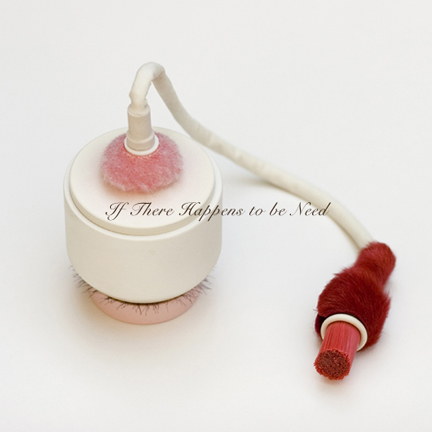
The final stop of the night was the ADA GALLERY, where my friend Langdon Graves had her work featured. I hadn't seen any of her work since she finished her Master's Degree from the Parson's School of Design in NYC. The new work was incredibly meticulous, combining an odd array of drawing and sculptural forms. The overall color of her work resembled cotton candy, and the images left me scratching my head wondering...... "how did she create this, and why did she create this". I didn't have time to read her artist's statement, so I think I might have to email her to ask her about her work.
Overall, the First Fridays of November was one of the best ones that I've experienced. Hopefully, many of you will do your gallery critiques a little early for the second nine weeks, and will get a chance to critique some of the work that I saw this weekend. I think there are plenty of interesting images out there to view and critique.
Tuesday, October 30, 2007
Collaboration of Hard Work and Inquisition
This entry is written in direct response to the work ethic of this class as a whole. As a level 4 | 5 student, you are responsible for representing the highest level of art-making that this program offers, and it is your duty to represent it with respect to both yourselves and to the work and energy put into this program’s making. As an instructional leader of this department, I take great pride in what we do here. I work as hard as I can to stay informed about art in its current state, and constantly seek creative and innovative ways to relay that information to my students. My goal is that the upper level students of this department accept the responsibility of being artistic leaders, and work equally hard to promote a learning environment that can take pride in its students' conceptual thought and creative art-making.
I’m writing this in reaction to the results of our Critique Week with the expectation that the work ethic and invested thinking will improve in the next nine-week period. Be reminded that you are all the role models to the students who are in levels 1,2 and 3. Those students in the lower levels will look to your example as they work through the ranks of our program. It is essential, for the future growth of our program, that your artwork is representative of a program interested in conceptual, forward-thinking artwork that is both personal and truthful.
There were many students in my classes whose work was incredibly personal and thoughtful in solving the artistic problem for the nine-week period. Though there are many successes to celebrate from our first quarter together, there were also a number of students who did not demonstrate the work ethic that this department expects of its students. I want each of you to feel like a part of this department and I want there to be a collective work ethic that is unrivaled by any other art department in the State. The only way to ensure this is to have each of you working and thinking as hard as possible while in my classes. Achieving this level of excellence reaches well beyond my classroom, and requires you all to be more aware of your self, your environment, and the art community of which we are all a part. I realize that I expect a great deal of my students, but please understand that it will never be my aim to discourage your efforts, but rather it is my goal to help you attain your own artistic and conceptual potential through a collaboration of hard work, and inquisition. We have all of the tools to become exemplary, we just have to learn to use them with efficiency, creativity, and exactitude.
I’m writing this in reaction to the results of our Critique Week with the expectation that the work ethic and invested thinking will improve in the next nine-week period. Be reminded that you are all the role models to the students who are in levels 1,2 and 3. Those students in the lower levels will look to your example as they work through the ranks of our program. It is essential, for the future growth of our program, that your artwork is representative of a program interested in conceptual, forward-thinking artwork that is both personal and truthful.
There were many students in my classes whose work was incredibly personal and thoughtful in solving the artistic problem for the nine-week period. Though there are many successes to celebrate from our first quarter together, there were also a number of students who did not demonstrate the work ethic that this department expects of its students. I want each of you to feel like a part of this department and I want there to be a collective work ethic that is unrivaled by any other art department in the State. The only way to ensure this is to have each of you working and thinking as hard as possible while in my classes. Achieving this level of excellence reaches well beyond my classroom, and requires you all to be more aware of your self, your environment, and the art community of which we are all a part. I realize that I expect a great deal of my students, but please understand that it will never be my aim to discourage your efforts, but rather it is my goal to help you attain your own artistic and conceptual potential through a collaboration of hard work, and inquisition. We have all of the tools to become exemplary, we just have to learn to use them with efficiency, creativity, and exactitude.
Subscribe to:
Posts (Atom)
